


Get Investor Updates
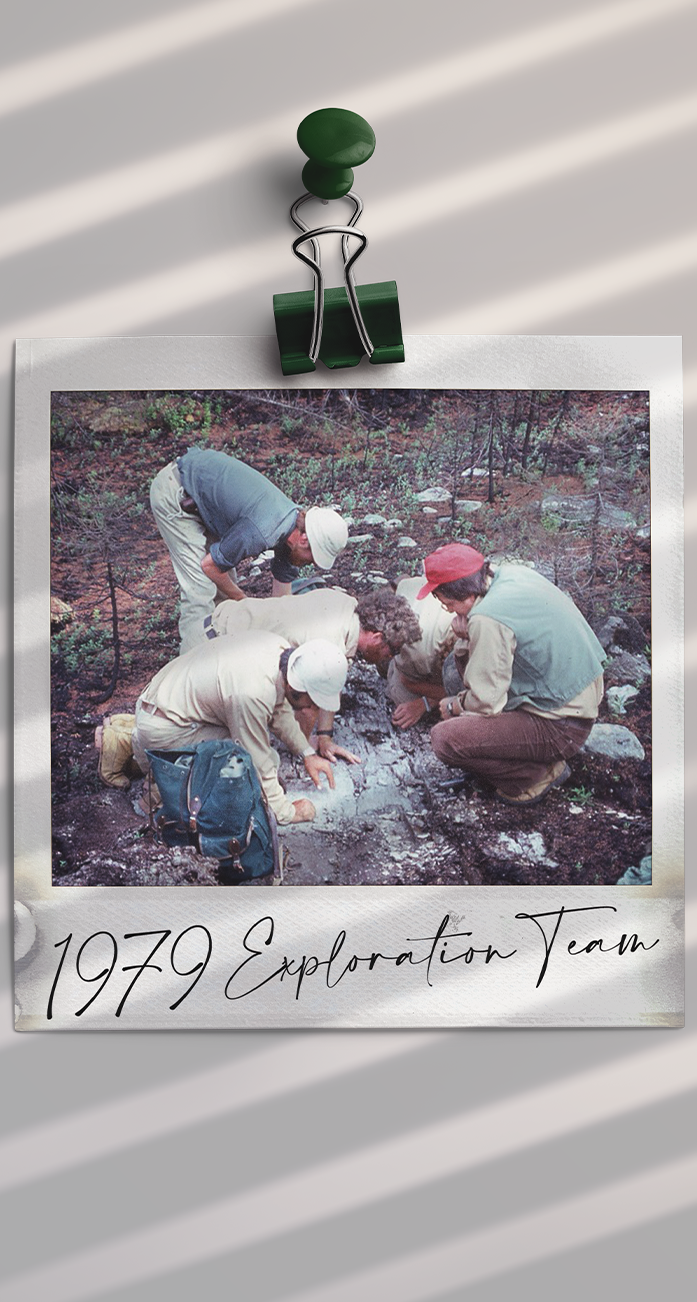
Howells Lake Antimony-Gold Project
The system remains open and is now supported by modern geophysics, Ontario government exploration funding, an executed exploration agreement with Eabametoong First Nation, and an active Phase I drill program.
Scale, Grade, Targets, and Jurisdiction lined up in one project




From Opportunity to District Control

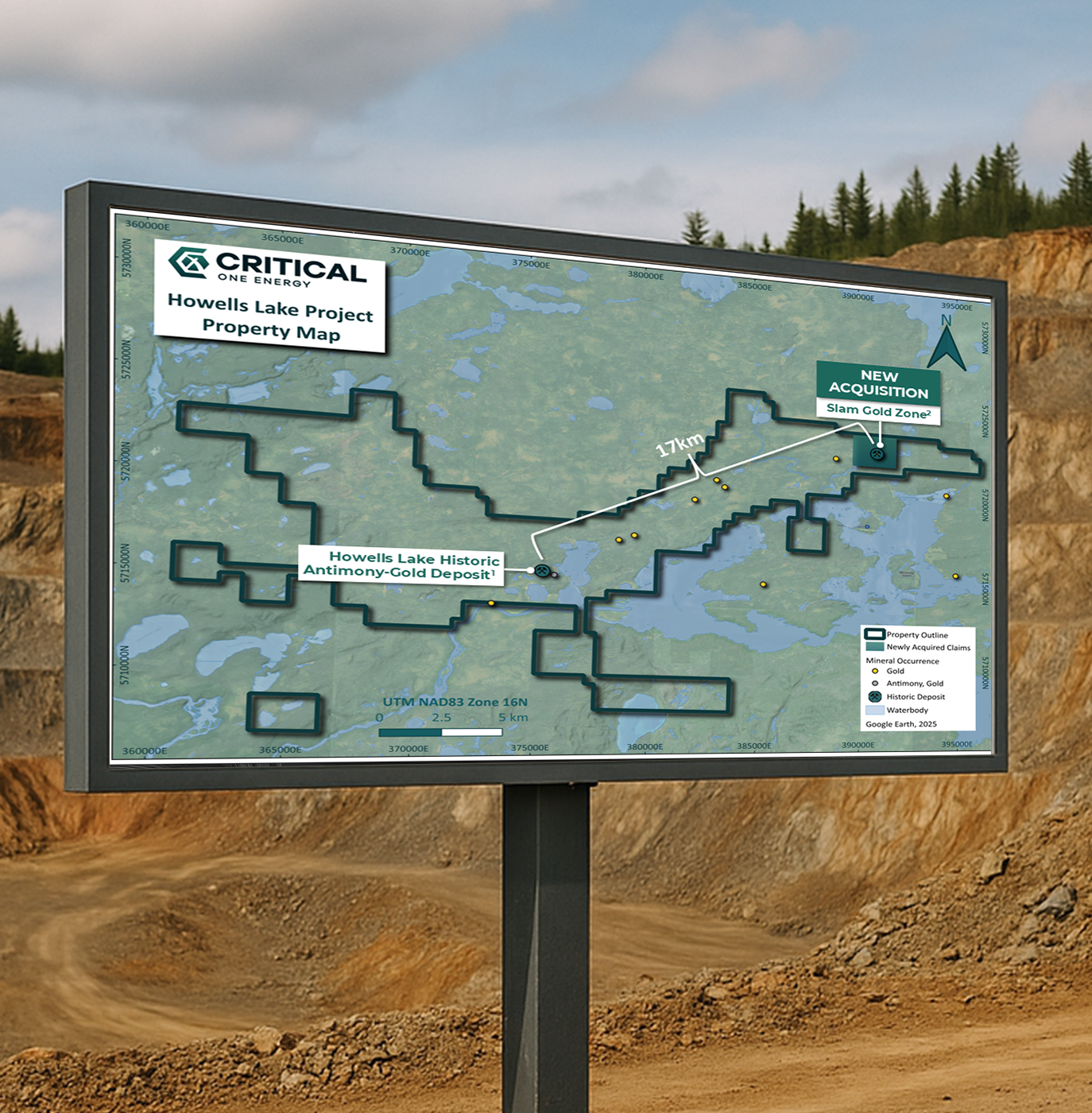
Airborne EM Pinpoints the Next Holes

Historical High-Grade Antimony
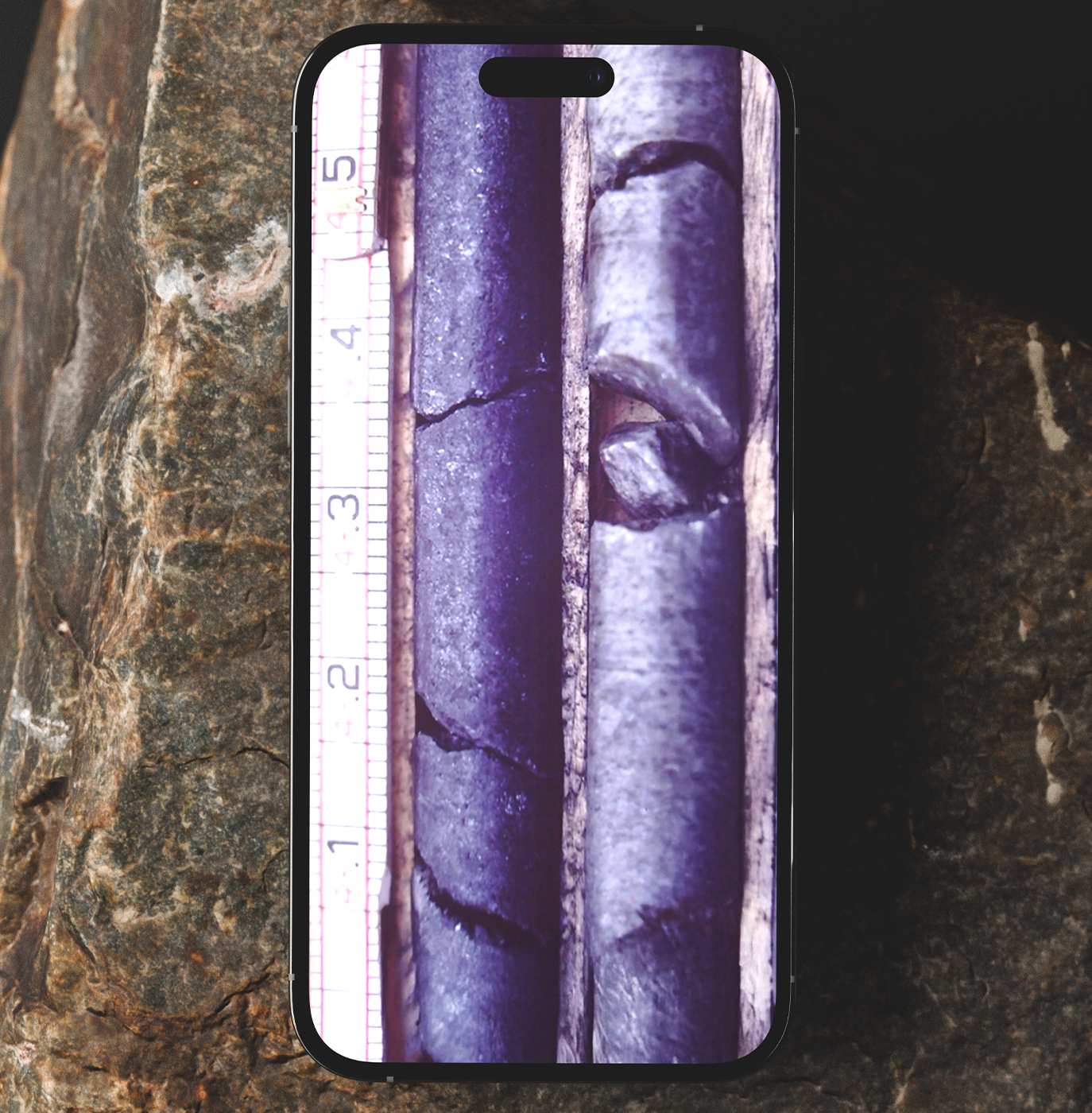
Gold Intervals Add Optionality

Four Signals of a Compelling Project


All You Need to Know about Howells Lake

Antimony (Sb) is officially designated a critical mineral across the U.S., EU, Canada, Japan, UK and Australia, with irreplaceable roles in flame-retardant systems, defense (munitions, armor, night-vision), and next-gen energy storage.
Supply is highly concentrated (China, Russia and allies dominate mining and refining), which creates persistent security-of-supply risk and policy tailwinds for new Western sources.
Recent export restrictions and stockpiling shifted the market into structural deficit and multi-decade-high pricing, a setup expected to persist as new Western supply is slow to come online.
Howells Lake hosts a historical (pre-NI 43-101) resource in the East Zone of ~1.7 million tons grading ~1.4% Sb, open at depth and along strike; this is historical and not current under NI 43-101 and will require verification drilling and updated modeling.
The broader system shows multiple historical antimony-gold intervals (e.g., up to 24.7 m at ~0.96% Sb; 8.35 m at 5.37% Sb) and very high-grade surface samples (up to 59.2% Sb and 14.19 g/t Au) across >5 km of alteration and deformation corridors, indicating room for scale.
The project sits in Northwestern Ontario, one of the world’s top mining jurisdictions, with road/air access and proximity to the Ring of Fire corridor and Hemlo camp.
Ontario and Canada have explicit Critical Minerals strategies, and the province’s permitting framework and infrastructure focus are supportive for strategically important metals like antimony.
The project has now received its Ontario exploration permit, and Critical One has signed an exploration agreement with Eabametoong First Nation covering consultation, environmental monitoring, and community participation during the current phase of work.
Location, access, policy alignment, and active community engagement reduce geopolitical and permitting uncertainty relative to many other jurisdictions.
A data-driven program is now active: >3,000 km of VTEM airborne geophysics has helped define targets, the project has received Ontario government exploration funding, the Ontario exploration permit has been issued, and Phase I drilling has commenced to verify and expand known antimony-gold mineralization and test newly identified targets.
Critical One is now in a catalyst-rich window centered on drilling progress, target validation, and results from the current exploration program.
In parallel, the company has consolidated district-scale control across ~25,000 hectares and ~30 km of strike, enabling systematic follow-up across the broader mineralized corridor.
North America currently has minimal antimony mining/refining; that scarcity is precisely why Western policy, defense stockpiling, and offtake interest are intensifying.
Projects with gold co-product (like Howells Lake) gain flexibility through cyclical antimony pricing while targeting strategic offtake routes.
The lack of Western processing capacity, ongoing stockpiling, and the slow pace for new supply elsewhere can support offtake negotiations and development optionality as the project advances toward compliant resources and metallurgy.
.png)
.png)

